Understanding the principles behind DXpedition support
The European DX Foundation (EUDXF) is dedicated to supporting high‑value DXpeditions that contribute meaningfully to the amateur radio community. To ensure that funding is used responsibly and effectively, EUDXF follows a clear and transparent set of criteria, expectations, and evaluation procedures. This article outlines how the funding process works and what DXpedition teams can expect when applying for support.

What Makes a DXpedition Fundable?
EUDXF focuses its resources on DXpeditions that offer significant DX value for European operators. When reviewing an application, the foundation considers several key factors:
- Position on the Clublog Most Wanted List (Western Europe) Priority is given to expeditions targeting entities ranked Top 100.
- Recent activity from the entity Locations with little or no recent amateur radio activity receive higher consideration.
- IOTA expeditions Eligible only if the island’s DXCC entity itself appears on the Most Wanted List.
- Expected number of QSOs Well‑planned operations with broad reach are favored.
- Team experience and composition Proven operators and well‑structured teams strengthen an application.
- Equipment and antennas used Reliable, effective setups indicate a higher chance of success.
- Total cost of the expedition Budgets must be realistic and proportional.
- EUDXF membership among team members While not mandatory, membership is considered a positive factor.
- QSL policy and reliability Expeditions must demonstrate a solid track record of proper QSL handling.
- DXCC creditability Operations must meet DXCC requirements.
- Educational or humanitarian components Additional social value is taken into account.
How to Apply for Funding
DXpedition teams can request support by completing the official EUDXF DXpedition Support Form (Excel format).
Each application is reviewed individually by the EUDXF board.
Expectations for Supported DXpeditions
Once support is granted, EUDXF asks each team to meet several obligations to ensure transparency and community benefit:
Visibility and Communication
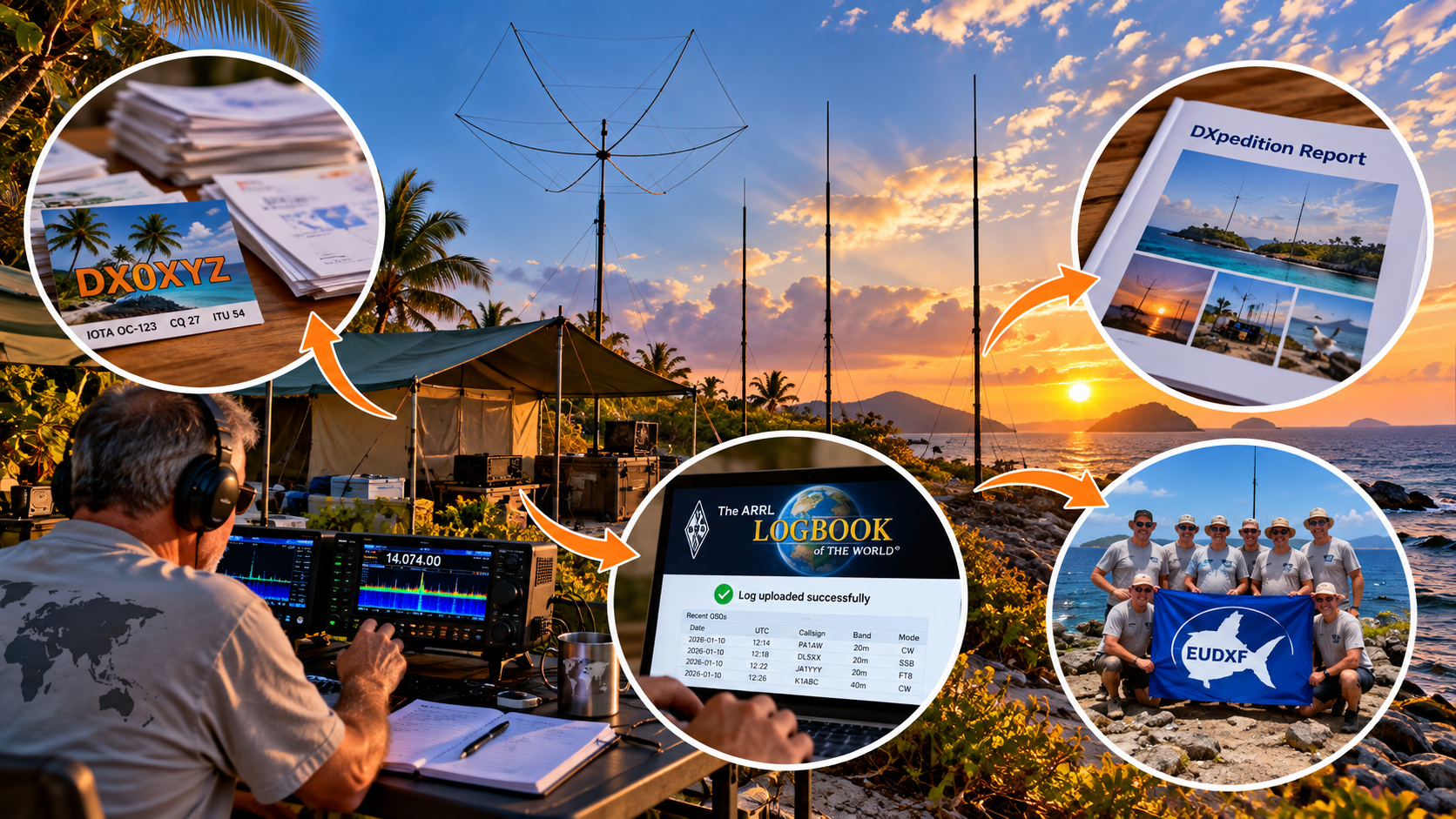
- Display the EUDXF logo on the QSL card.
- Mention EUDXF support on the expedition website (if available).
QSL Handling
- All direct QSL requests with sufficient return postage must be answered by mail.
- All other requests should be processed via the bureau.
- Upload the complete log to LoTW within 6 months.
- Provide one QSL card for the EUDXF collection.
Reporting
- Submit a DXpedition report within 3 months after returning home. This report will be published in the EUDXF newsletter and on the website.
Documentation
- Provide a team photo with the EUDXF flag. (The flag is supplied by EUDXF.)

Performance Evaluation
Comparing Results with Forecasts
A key part of the EUDXF funding process is the post‑expedition evaluation. After the DXpedition concludes, EUDXF compares the actual results with the forecasts provided in the original funding request.
This includes reviewing:
- The number of QSOs achieved versus the anticipated number
- Band and mode distribution
- Geographic reach and accessibility for European DXers
- Operational reliability and uptime
- QSL performance and LoTW upload compliance
- Any additional goals stated in the application (e.g., educational or humanitarian activities)
Mode Balance: SSB, CW, and Digital
Because operating modes are an important and sometimes sensitive topic within the DX community, EUDXF specifically evaluates the balance between SSB, CW, and digital modes. The foundation looks at whether the expedition delivered a fair and representative spread across these modes, in line with the expectations and projections provided in the funding request.
This helps ensure that supported DXpeditions serve the widest possible group of operators and maintain inclusivity across traditional and modern operating practices.
Funding Disbursement
EUDXF provides financial support after the DXpedition has successfully met all obligations and submitted the required documentation. This ensures accountability and confirms that the operation delivered the value promised in the application.
In Summary
EUDXF funding is designed to support meaningful, well‑organized DXpeditions that benefit the wider amateur radio community. By applying clear criteria, requiring transparent follow‑up, and evaluating results against forecasts—including the balance between SSB, CW, and digital modes—the foundation ensures that its resources are used responsibly and that supported expeditions deliver real value to DXers across Europe and beyond.